United India Two-Wheeler Insurance: Reliable Protection for Every Ride
Whether you ride a motorcycle for daily commuting or weekend trips, having the right insurance is essential to protect yourself from unexpected financial losses. Accidents, theft, natural disasters, and third-party liabilities can occur without warning, making comprehensive bike insurance a necessity. United India Two-Wheeler Insurance offers dependable coverage with flexible policy options, cashless claim facilities, and valuable add-on covers to ensure complete peace of mind on every journey. (quickinsure.co.in)
Why Choose United India Two-Wheeler Insurance?
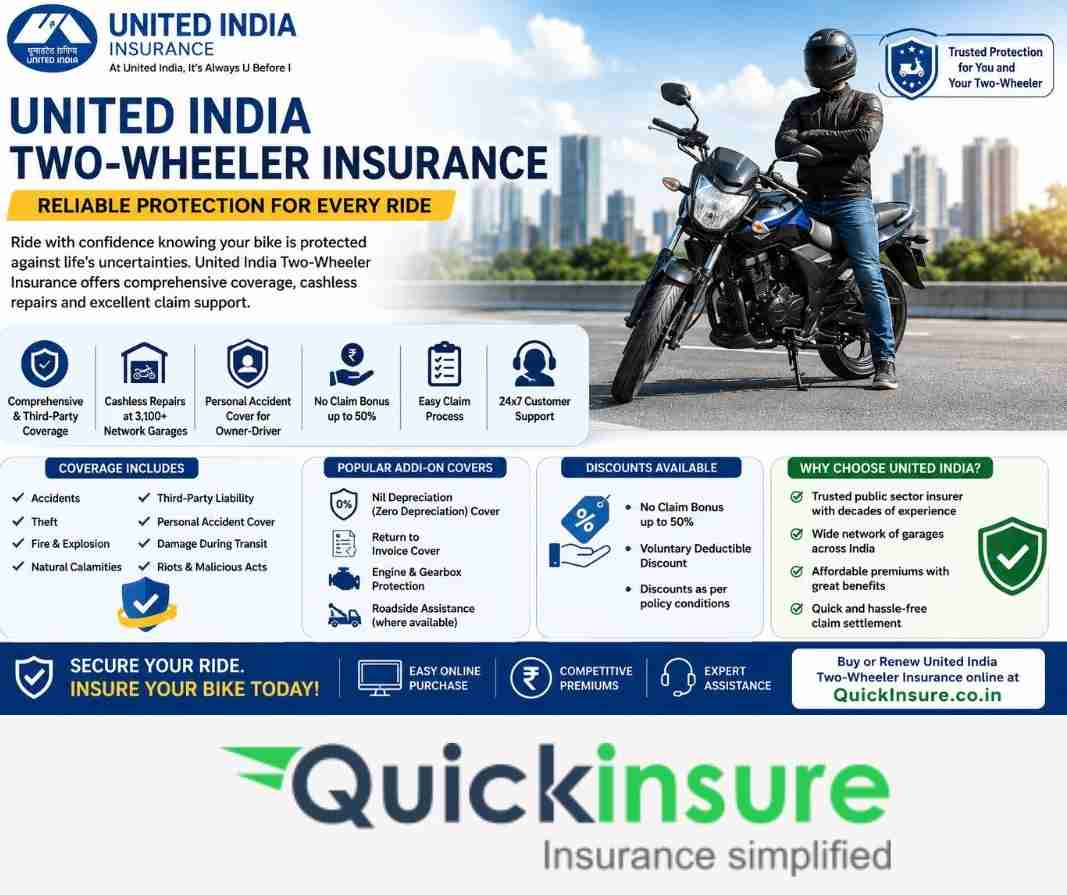
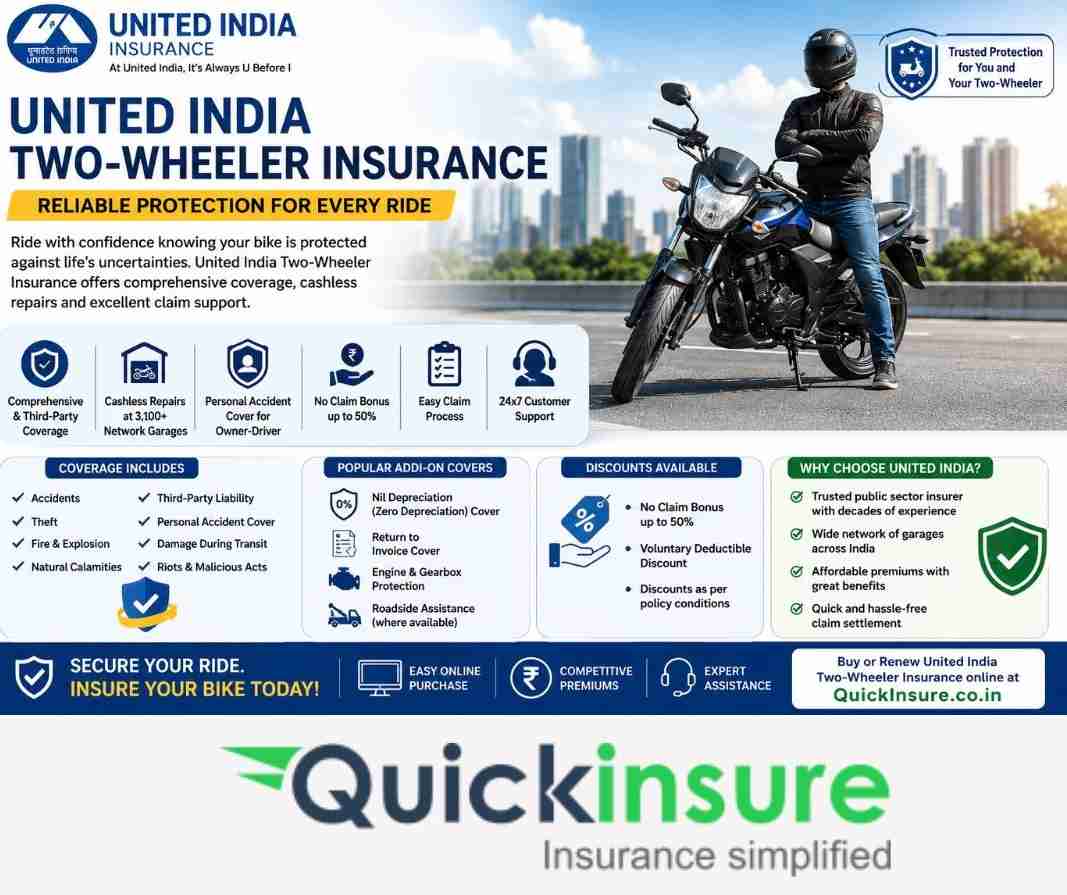
United India Insurance is one of India's trusted public sector insurers, offering comprehensive protection for bikes and scooters at affordable premiums. The company provides extensive coverage through a large network of garages and customer-friendly claim services.
Some of the key benefits include:
Comprehensive and Third-Party insurance plans
Cashless repairs at over 3,100 network garages
Protection against accidents, theft, fire, and natural calamities
Personal Accident Cover for the owner-driver
No Claim Bonus (NC benefits of up to 50%
Multiple add-on covers for enhanced protection (quickinsure.co.in)
Types of Coverage Available
Comprehensive Two-Wheeler Insurance
A comprehensive policy protects your bike against:
Road accidents
Fire and explosions
Theft and burglary
Floods, cyclones, earthquakes, and storms
Riots and malicious acts
Damage during transit
Third-party liabilities
Personal Accident Cover for the owner-driver (quickinsure.co.in)
Third-Party Bike Insurance
Third-party insurance is mandatory under the Motor Vehicles Act. It covers:
Injury or death of a third party
Damage to third-party property
Legal liabilities arising from accidents involving your insured vehicle (quickinsure.co.in)
Popular Add-On Covers
You can enhance your protection by choosing optional add-ons such as:
Nil Depreciation (Zero Depreciation) Cover
Return to Invoice Cover
Engine and Gearbox Protection
Roadside Assistance (where available)
These add-ons help reduce your out-of-pocket expenses and provide broader financial protection during claims. (quickinsure.co.in)
What's Not Covered?
Like every insurance policy, United India Two-Wheeler Insurance has certain exclusions, including:
Normal wear and tear
Mechanical or electrical breakdown
Driving without a valid licence
Driving under the influence of alcohol or drugs
Consequential losses
War and nuclear risks
Claims outside the specified geographical area (quickinsure.co.in)
Discounts to Reduce Your Premium
United India Insurance offers several premium-saving benefits, including:
No Claim Bonus (NC of up to 50% for consecutive claim-free years
Voluntary deductible discounts
Discounts based on eligible policy conditions
Maintaining a claim-free record can significantly reduce your renewal premium. (quickinsure.co.in)
Simple Claim Process
In case of an accident, notify the insurer immediately and take your vehicle to a network garage for cashless repairs. The insurer will arrange for vehicle inspection and settle approved repair costs directly with the garage. Reimbursement claims are also available for repairs completed at non-network garages, subject to policy terms. (quickinsure.co.in)
Why Buy Through QuickInsure?
Buying United India Two-Wheeler Insurance through QuickInsure makes the process simple and convenient. You can compare plans, customise your policy with useful add-ons, receive competitive premium quotes, and purchase or renew your insurance online in just a few minutes. QuickInsure also provides expert assistance with policy selection, renewals, and claim support, ensuring a smooth insurance experience. (quickinsure.co.in)
Final Thoughts
United India Two-Wheeler Insurance provides dependable protection for your motorcycle or scooter with comprehensive coverage, flexible policy options, cashless claim services, and valuable add-ons. Whether you're purchasing a new policy or renewing an existing one, it helps safeguard you against unexpected financial losses while ensuring worry-free riding. Compare plans through QuickInsure and choose the coverage that best suits your needs. (quickinsure.co.in)