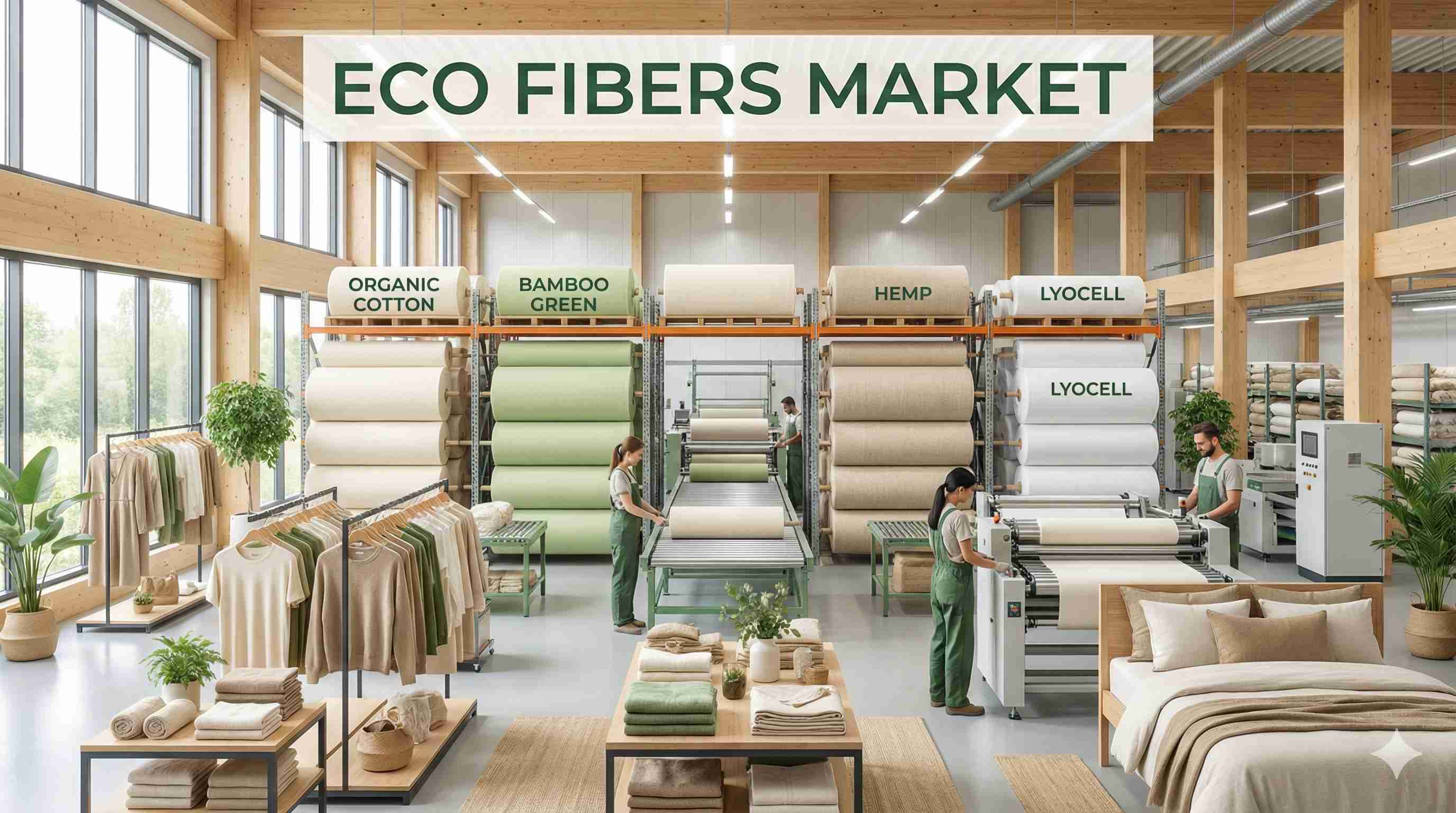
Eco Fibers Market – Growth, Trends, and Future Outlook
Market Overview
The Global Eco Fibers Market is experiencing remarkable growth as consumers and manufacturers increasingly prioritize sustainable textiles and environmentally friendly apparel. Valued at USD 49.0 billion in 2023, the market is projected to reach USD 97.0 billion by 2032, growing at a compound annual growth rate (CAGR) of 7.9%. The expansion is fueled by heightened awareness of the environmental hazards associated with conventional synthetic fibers, which contribute significantly to pollution, water contamination, and carbon emissions. As a result, apparel brands and textile manufacturers are actively shifting toward organic, recycled, and eco-friendly fiber alternatives that offer reduced environmental impact without compromising performance, comfort, or aesthetics.
Market Dynamics
Key Drivers
The primary driver of the eco fibers market is the rising consumer preference for sustainable and ethically produced apparel. Increasing awareness of the negative environmental effects of synthetic fibers, such as microplastic pollution, has pushed brands and retailers to adopt eco-friendly alternatives. Moreover, millennials and Gen Z consumers, who prioritize sustainable lifestyles, are influencing fashion and textile production trends globally.
By End-Use Sector
The end-use sectors include fashion & apparel, sports & activewear, home textiles, healthcare, and industrial manufacturing. Fashion and apparel account for the majority share, supported by initiatives from global clothing brands to incorporate eco fibers into mainstream collections.
Sports and activewear leverage recycled polyester, Tencel, and bamboo fibers for moisture management, durability, and comfort. Home textile manufacturers adopt organic cotton and hemp for bedding and upholstery, while healthcare applications use biodegradable and hypoallergenic fibers for surgical gowns, masks, and sanitary textiles. Industrial adoption is limited but growing due to the environmental advantages of bio-based fibers in packaging and composite materials.
Regional Analysis
Asia Pacific commanded the eco fibers market in 2023, holding 35.6% of revenue and is anticipated to witness the highest growth during the forecast period. The region benefits from major textile manufacturing hubs in China, India, Japan, and Australia, where rising demand for sustainable textiles and increased foreign investments are key growth drivers.
India is emerging as the fastest-growing market due to population growth, rising per capita apparel consumption, and government initiatives supporting organic cotton production and sustainable textile manufacturing. China’s investment in advanced textile production technologies and Japan’s focus on sustainable fashion are further strengthening the regional market.
Download a Complimentary PDF Sample Report: https://dimensionmarketresearc....h.com/report/eco-fib
Competitive Landscape
The eco fibers market is highly competitive, with key players focusing on sustainability, product innovation, and strategic collaborations. Major manufacturers are investing in research and development to enhance fiber quality, increase yield, and reduce environmental impact. Collaborations with fashion brands, retailers, and certification bodies are strengthening market presence and credibility.
Companies are also expanding production capacities, adopting advanced spinning and weaving technologies, and integrating recycled and organic raw materials to meet growing demand. Innovation in fiber blends, eco-friendly dyes, and sustainable supply chain practices is a key differentiator in this competitive landscape.
Future Outlook
The Global Eco Fibers Market is projected to maintain strong growth through 2032, driven by rising demand for sustainable apparel, increased adoption of bio-based fibers, and supportive government initiatives. Emerging trends such as circular fashion, recycling of synthetic fibers, and innovations in biodegradable and high-performance eco fibers will further expand market opportunities. With increasing consumer awareness of environmental issues and corporate sustainability commitments, eco fibers are expected to play a critical role in shaping the future of the textile and apparel industry.
Frequently Asked Questions (FAQs)
1. What are eco fibers?
Eco fibers are sustainable textile fibers derived from natural or recycled sources, including organic cotton, bamboo, hemp, Tencel, and recycled polyester, designed to reduce environmental impact.
2. What drives the growth of the eco fibers market?
Market growth is driven by consumer demand for sustainable apparel, regulatory support for bio-based manufacturing, environmental concerns, and increasing adoption of circular economy practices.
3. Which region dominates the eco fibers market?
Asia Pacific holds the largest share and is projected to witness the highest growth due to strong textile manufacturing, rising demand for sustainable textiles, and government initiatives in China, India, Japan, and Australia.
4. What are the major applications of eco fibers?
Eco fibers are widely used in apparel, home textiles, technical textiles, and industrial applications, with fashion and apparel being the dominant application segment.
5. What trends are shaping the future of eco fibers?
Key trends include the use of recycled polyester, organic cotton, bamboo and hemp fibers, development of biodegradable and high-performance blends, circular fashion practices, and adoption of sustainability certifications.
Summary of Key Insights
The Global Eco Fibers Market is projected to grow from USD 49.0 billion in 2023 to USD 97.0 billion by 2032 at a CAGR of 7.9%. Growth is driven by the rising demand for sustainable apparel, environmental awareness, and supportive government initiatives promoting bio-based production.
Asia Pacific leads the market, with India emerging as the fastest-growing country, while North America and Europe remain significant contributors due to consumer awareness and regulatory support. Innovations in fiber blends, biodegradable materials, recycled polymers, and circular fashion practices are expected to define future growth. With increasing adoption across apparel, home textiles, and technical textiles, eco fibers are becoming a central element of the global sustainable textile movement.
Purchase the report for comprehensive details: https://dimensionmarketresearc....h.com/checkout/eco-f