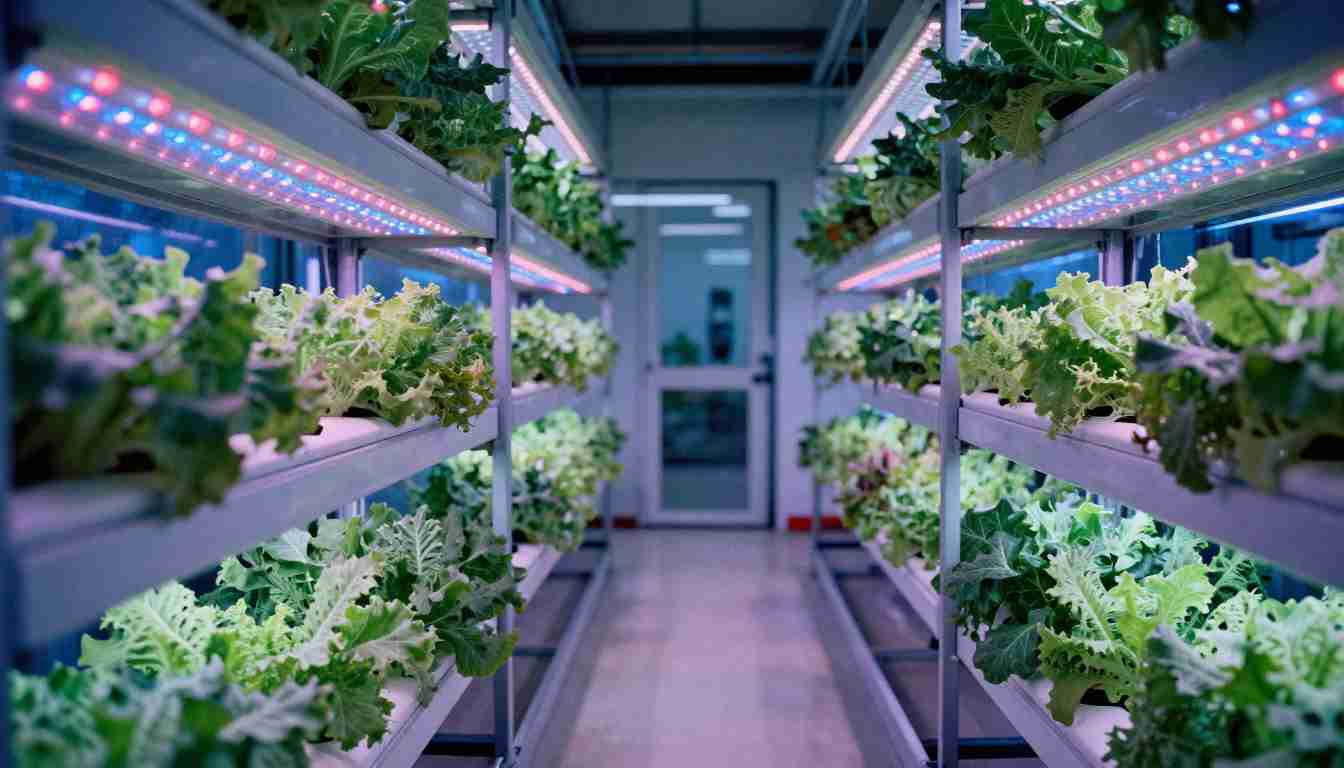
Global Controlled Environment Agriculture Market Size, Growth Trends & Forecast 2033
The Global Controlled Environment Agriculture Market is gaining strong momentum as the global food system adapts to climate volatility, population growth, and increasing demand for sustainable agricultural practices. Controlled Environment Agriculture (CEA) enables crops to be grown under optimized conditions using advanced technologies such as indoor farming, vertical farming, greenhouses, hydroponics, aeroponics, and aquaponics. These systems allow growers to control temperature, humidity, light, nutrients, and CO₂ levels, ensuring higher productivity and consistent crop quality throughout the year.
In recent years, the market has witnessed rapid adoption across both developed and emerging economies due to rising concerns over food security, limited arable land, and water scarcity. Urbanization and the shift toward locally produced, pesticide-free food have further accelerated the use of controlled environment farming systems. By minimizing environmental risks and enhancing operational efficiency, CEA has emerged as a viable solution to modern agricultural challenges.
Market Size and Growth Outlook
The Global Controlled Environment Agriculture Market is projected to reach a market value of USD 27,138.1 Million in 2024. This strong valuation reflects increasing investments in advanced agricultural technologies and a growing emphasis on year-round crop production. As climate unpredictability continues to affect traditional farming methods, CEA offers a controlled and reliable alternative that ensures consistent output regardless of external conditions.
Looking ahead, the market is expected to experience robust expansion, reaching USD 125,617.3 Million by 2033, growing at a compound annual growth rate (CAGR) of 19.2%. This impressive growth trajectory highlights the rising acceptance of controlled environment farming across commercial growers, agribusinesses, and technology-driven agricultural startups.
The scalability of CEA systems is a major contributor to this growth. From small-scale urban farms to large commercial greenhouse operations, controlled environment solutions can be tailored to diverse production needs. As operational costs decrease through technological maturity and economies of scale, the adoption rate is expected to accelerate further across global markets.
Key Drivers Shaping the Global Controlled Environment Agriculture Market
Rising Demand for Sustainable Food Production
Sustainability is a core driver of the Global Controlled Environment Agriculture Market. CEA systems significantly reduce water usage, minimize pesticide dependency, and optimize land use compared to traditional farming. These benefits align with global sustainability goals and encourage governments, private investors, and growers to support controlled environment farming initiatives.
Climate Change and Weather Uncertainty
Unpredictable weather patterns, prolonged droughts, and extreme temperatures are negatively impacting conventional agriculture. Controlled environment agriculture mitigates these risks by providing stable growing conditions, enabling consistent yields regardless of external climate fluctuations. This reliability is particularly valuable for regions facing severe environmental stress.
Urbanization and Local Food Production
Rapid urban expansion has increased the distance between food production centers and consumers. CEA supports urban and peri-urban farming, allowing fresh produce to be grown closer to end-users. This reduces transportation costs, lowers carbon emissions, and ensures fresher, more nutritious food supplies.
Technological Advancements
The integration of smart technologies such as automated climate control, LED grow lighting, robotics, and AI-based analytics is transforming the efficiency of controlled environment agriculture. These tools enable precise crop management, early detection of plant stress, and optimized resource utilization, enhancing overall productivity and profitability.
Market Segmentation Analysis
By Farming Type
The Global Controlled Environment Agriculture Market encompasses various farming methods, including indoor farming, vertical farming, and greenhouse-based cultivation. Indoor and vertical farming systems are gaining popularity due to their ability to maximize space utilization, especially in urban environments. Greenhouses continue to hold a significant share, particularly in regions with supportive climatic conditions and established agricultural infrastructure.
By Crop Type
High-value crops such as leafy greens, herbs, tomatoes, cucumbers, strawberries, and peppers dominate controlled environment agriculture production. These crops benefit most from optimized growing conditions and shorter cultivation cycles. Additionally, the market is expanding into specialty crops and medicinal plants, further diversifying revenue opportunities.
By Technology
Key technologies driving the market include hydroponics, aeroponics, aquaponics, and soil-based systems. Hydroponics remains widely adopted due to its efficiency and relatively lower complexity. Aeroponics is gaining traction for its superior water efficiency and faster plant growth, while aquaponics appeals to growers seeking integrated fish and plant production systems.
Download a Complimentary PDF Sample Report:
https://dimensionmarketresearc....h.com/request-sample
Regional Analysis
North America
According to industry analysis, North America is expected to oversee the largest market growth, holding 34.1% of the market share in 2024. The region dominates the controlled environment agriculture marketplace due to several key factors. Strong technological innovation, significant capital investment, and a supportive regulatory environment have positioned North America as a leader in CEA adoption.
The presence of advanced infrastructure, skilled labor, and high consumer demand for organic and locally produced food further supports market expansion. Additionally, research initiatives and public-private partnerships are accelerating the commercialization of innovative controlled environment farming solutions across the region.
Europe
Europe represents a mature and steadily growing market for controlled environment agriculture. Strict environmental regulations, sustainability-focused agricultural policies, and rising consumer awareness of food quality are driving adoption. Greenhouse farming is particularly prominent, supported by advancements in energy-efficient systems and renewable energy integration.
Asia-Pacific
The Asia-Pacific region is emerging as a high-growth market due to rapid urbanization, population growth, and increasing food demand. Countries in this region are investing heavily in vertical farming and indoor agriculture to overcome land constraints and ensure food security. Government initiatives promoting smart agriculture are further boosting market potential.
Rest of the World
Regions including Latin America, the Middle East, and Africa are gradually adopting controlled environment agriculture solutions. While adoption is currently limited compared to developed regions, growing awareness of water efficiency and climate resilience is expected to drive future growth.
Competitive Landscape and Strategic Developments
The Global Controlled Environment Agriculture Market is characterized by continuous innovation and strategic expansion. Market participants are focusing on developing cost-effective technologies, improving energy efficiency, and expanding their operational footprint. Strategic collaborations, technology licensing, and capacity expansion remain common approaches to gain competitive advantage.
Investments in research and development are accelerating the introduction of next-generation farming systems with enhanced automation and data analytics capabilities. These developments are expected to further lower entry barriers and attract new participants to the market.
Challenges and Market Constraints
Despite its strong growth outlook, the Global Controlled Environment Agriculture Market faces certain challenges. High initial capital investment, energy consumption concerns, and technical complexity can limit adoption, particularly among small-scale farmers. However, ongoing technological advancements and declining equipment costs are gradually addressing these constraints.
Additionally, the need for skilled workforce and operational expertise remains a challenge. Training programs and technology-driven automation are expected to mitigate this issue over time.
Key Insights Summary
The Global Controlled Environment Agriculture Market is undergoing transformative growth, driven by sustainability needs, climate resilience, and technological innovation. With a projected CAGR of 19.2% and significant expansion expected through 2033, the market offers substantial opportunities for stakeholders across the agricultural value chain. North America currently leads the market, while Asia-Pacific presents strong future growth potential. As technologies continue to evolve and costs decline, controlled environment agriculture is set to play a critical role in shaping the future of global food production.
Purchase the report for comprehensive details:
https://dimensionmarketresearc....h.com/checkout/contr