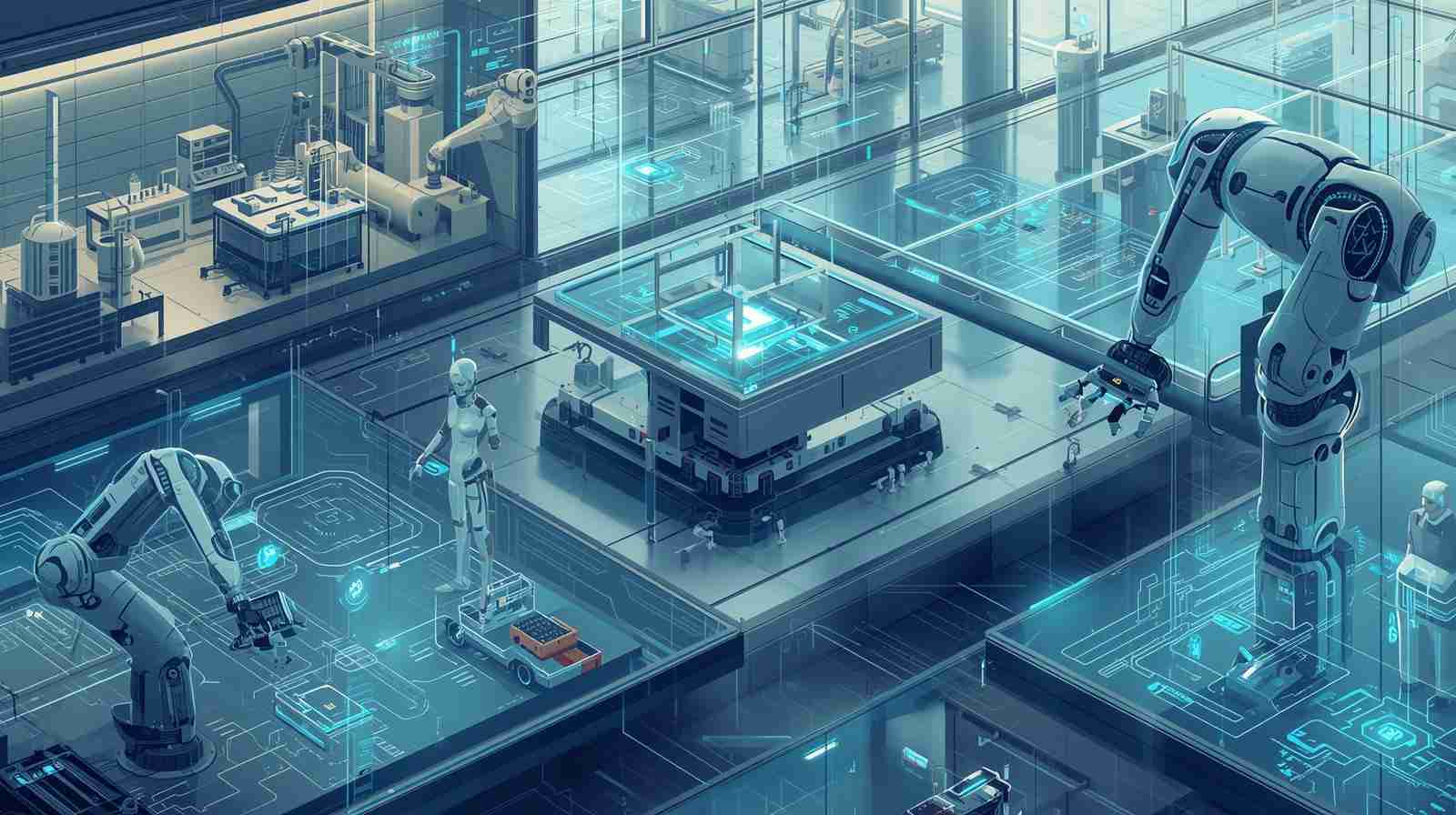
Global Embodied AI Market Size, Share, Growth Trends & Forecast 2024–2033
The Global Embodied Ai Market is emerging as one of the most transformative segments within the broader artificial intelligence landscape. Unlike traditional AI systems that operate in purely digital environments, embodied AI integrates intelligence directly into physical systems such as robots, autonomous machines, smart devices, and interactive hardware. This fusion of perception, cognition, and physical action is redefining how machines interact with the real world, enabling more adaptive, human-like, and context-aware behaviors across industries.
In 2024, the Global Embodied AI Market is valued at USD 2,533.5 million, reflecting strong adoption across developed and emerging economies. With increasing investments in robotics, automation, and intelligent systems, the market is anticipated to reach USD 8,756.5 million by 2033, expanding at a robust compound annual growth rate (CAGR) of 15.0%. This growth trajectory highlights the strategic importance of embodied AI as a foundational technology for next-generation automation and intelligent infrastructure.
Understanding Embodied AI and Its Market Significance
Embodied AI refers to artificial intelligence systems that are embedded in physical entities capable of sensing, learning, and interacting with their environment. These systems leverage sensors, actuators, and AI algorithms to perceive surroundings, make decisions, and execute actions in real time. Unlike software-only AI, embodied AI emphasizes real-world interaction, adaptability, and continuous learning from physical experiences.
The market significance of embodied AI lies in its ability to bridge the gap between digital intelligence and physical execution. As industries increasingly adopt automation, the demand for intelligent machines that can navigate complex environments, collaborate with humans, and adapt to changing conditions is growing rapidly. Embodied AI enables machines to move beyond pre-programmed tasks and operate with a higher degree of autonomy and flexibility.
Key Market Drivers Fueling Growth
Rising Demand for Intelligent Robotics
One of the primary drivers of the Global Embodied AI Market is the growing demand for intelligent robotics across industrial and service sectors. Manufacturers are increasingly deploying collaborative robots that can work alongside humans, adapt to different tasks, and operate safely in shared environments. Embodied AI enables these robots to perceive human actions, respond intelligently, and optimize workflows.
Advancements in AI and Sensor Technologies
Rapid advancements in deep learning, reinforcement learning, computer vision, and natural language processing are significantly enhancing the capabilities of embodied AI systems. At the same time, improvements in sensor technologies such as LiDAR, depth cameras, tactile sensors, and inertial measurement units are enabling more accurate perception and spatial awareness.
Increasing Automation Across Industries
Global industries are under constant pressure to improve efficiency, reduce labor dependency, and enhance operational resilience. Embodied AI supports advanced automation by enabling machines to handle tasks that require physical interaction, decision-making, and adaptability. In logistics and warehousing, for example, autonomous mobile robots equipped with embodied AI can navigate facilities, manage inventory, and optimize material flow.
Integration with Edge Computing and IoT
The integration of embodied AI with edge computing and the Internet of Things (IoT) is another major growth driver. Edge-based AI processing allows embodied systems to make real-time decisions without relying heavily on cloud connectivity, reducing latency and enhancing reliability. This is particularly critical for applications such as autonomous vehicles, industrial robots, and healthcare devices.
As smart environments become more prevalent, embodied AI systems are increasingly interconnected, enabling seamless data exchange, coordinated actions, and enhanced situational awareness. This convergence is expanding the scope and scalability of embodied AI deployments.
Market Challenges and Restraints
Despite its strong growth potential, the Global Embodied AI Market faces several challenges. High development and deployment costs remain a significant barrier, particularly for small and medium-sized enterprises. Designing, training, and maintaining embodied AI systems requires substantial investments in hardware, software, and skilled personnel.
Another challenge is the complexity of operating in unstructured and dynamic environments. While embodied AI systems have made significant progress, ensuring consistent performance and safety in real-world conditions remains an ongoing challenge. Ethical considerations, data privacy concerns, and regulatory uncertainties related to autonomous systems may also impact market growth in certain regions.
Emerging Trends Shaping the Market
Human-Robot Collaboration
A notable trend in the embodied AI market is the increasing focus on human-robot collaboration. Rather than replacing human workers, embodied AI systems are being designed to augment human capabilities. Collaborative robots equipped with advanced perception and learning abilities can assist workers, reduce physical strain, and enhance productivity in manufacturing and healthcare settings.
Development of General-Purpose Robots
The market is witnessing a shift toward general-purpose robots capable of performing multiple tasks across different environments. Embodied AI enables these robots to learn new skills, adapt to diverse scenarios, and operate with minimal reprogramming. This versatility is expected to drive adoption across a wide range of applications.
Growth of Simulation and Digital Twins
Simulation environments and digital twins are increasingly being used to train embodied AI systems. By learning in virtual environments, AI models can acquire complex behaviors before being deployed in the real world. This approach reduces training costs, accelerates development, and improves system safety and reliability.
Download a Complimentary PDF Sample Report:
https://dimensionmarketresearc....h.com/request-sample
Market Segmentation Overview
The Global Embodied AI Market can be segmented based on component, application, and end-use industry.
By component, the market includes hardware, software, and services. Hardware components such as sensors, processors, and actuators account for a significant share, while software platforms and AI models drive intelligence and adaptability. Services related to integration, maintenance, and training are also gaining importance.
By application, key segments include robotics, autonomous vehicles, smart devices, and intelligent systems. Robotics remains the dominant application area, supported by strong demand from industrial and service sectors.
By end-use industry, the market spans manufacturing, healthcare, logistics, agriculture, retail, defense, and others. Manufacturing and logistics are currently leading adopters, while healthcare and agriculture are expected to witness accelerated growth during the forecast period.
Competitive Landscape and Innovation Focus
The Global Embodied AI Market is characterized by intense innovation and continuous technological advancement. Market participants are focusing on developing more adaptable, efficient, and scalable embodied AI systems. Strategic partnerships, product innovation, and investments in research and development are common strategies to gain a competitive edge.
Companies are also emphasizing modular and customizable solutions to address diverse industry requirements. As competition intensifies, innovation in AI algorithms, hardware integration, and system interoperability will play a critical role in shaping the future market landscape.
Summary of Key Insights
The Global Embodied AI Market is poised for substantial growth as intelligent physical systems become integral to modern automation and digital transformation strategies. Valued at USD 2,533.5 million in 2024 and projected to reach USD 8,756.5 million by 2033, the market reflects strong confidence in the future of embodied intelligence.
Driven by advancements in AI, robotics, and sensor technologies, embodied AI is enabling machines to interact more naturally and effectively with the physical world. North America currently dominates the market, while Asia-Pacific is emerging as a high-growth region. As industries continue to embrace intelligent automation, embodied AI will play a pivotal role in shaping the next generation of smart, adaptive, and autonomous systems worldwide.
Purchase the report for comprehensive details:
https://dimensionmarketresearc....h.com/checkout/embod