Cholamandalam MS Two-Wheeler Insurance: Reliable Protection for Every Ride
A two-wheeler is one of the most convenient modes of transportation, but it is also exposed to risks such as accidents, theft, natural disasters, and third-party liabilities. Having the right insurance policy protects you from unexpected financial losses while ensuring legal compliance. Cholamandalam MS Two-Wheeler Insurance offers comprehensive coverage, flexible policy options, valuable add-on covers, and a hassle-free claims process to keep you protected on every journey.
What is Cholamandalam MS Two-Wheeler Insurance?
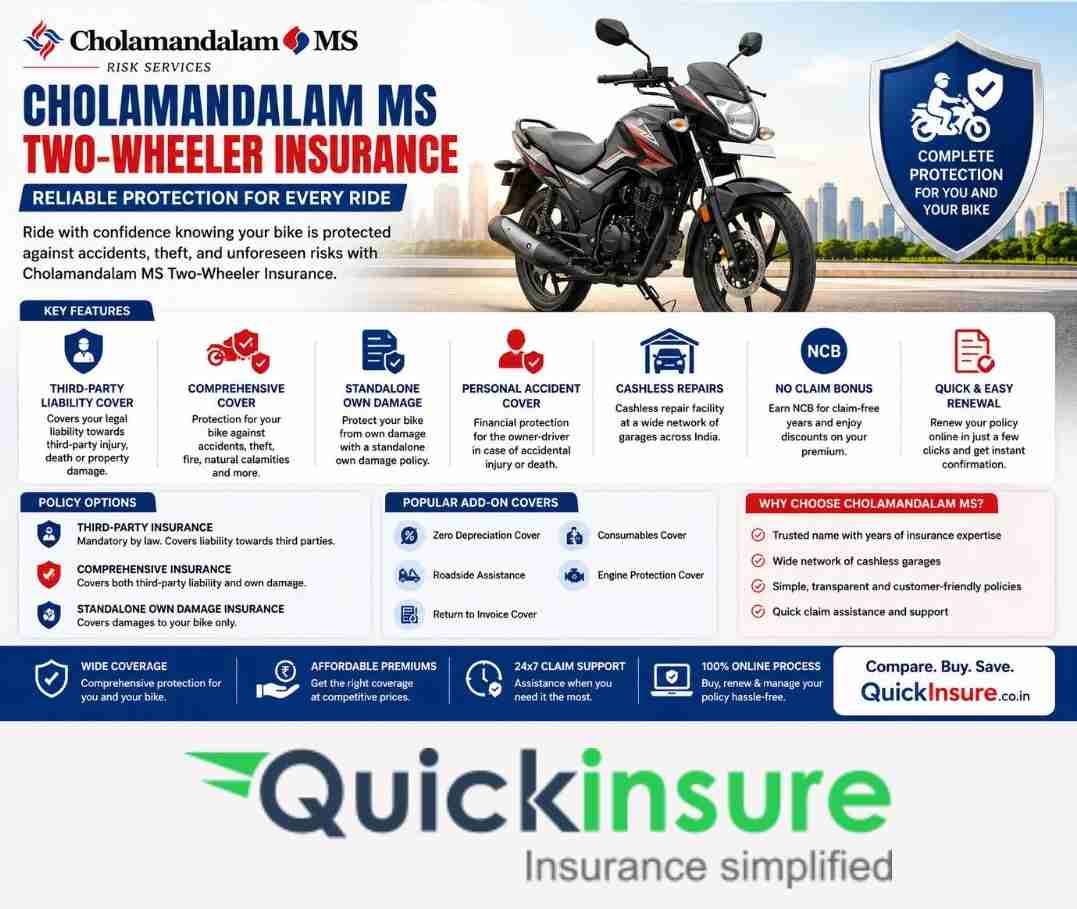
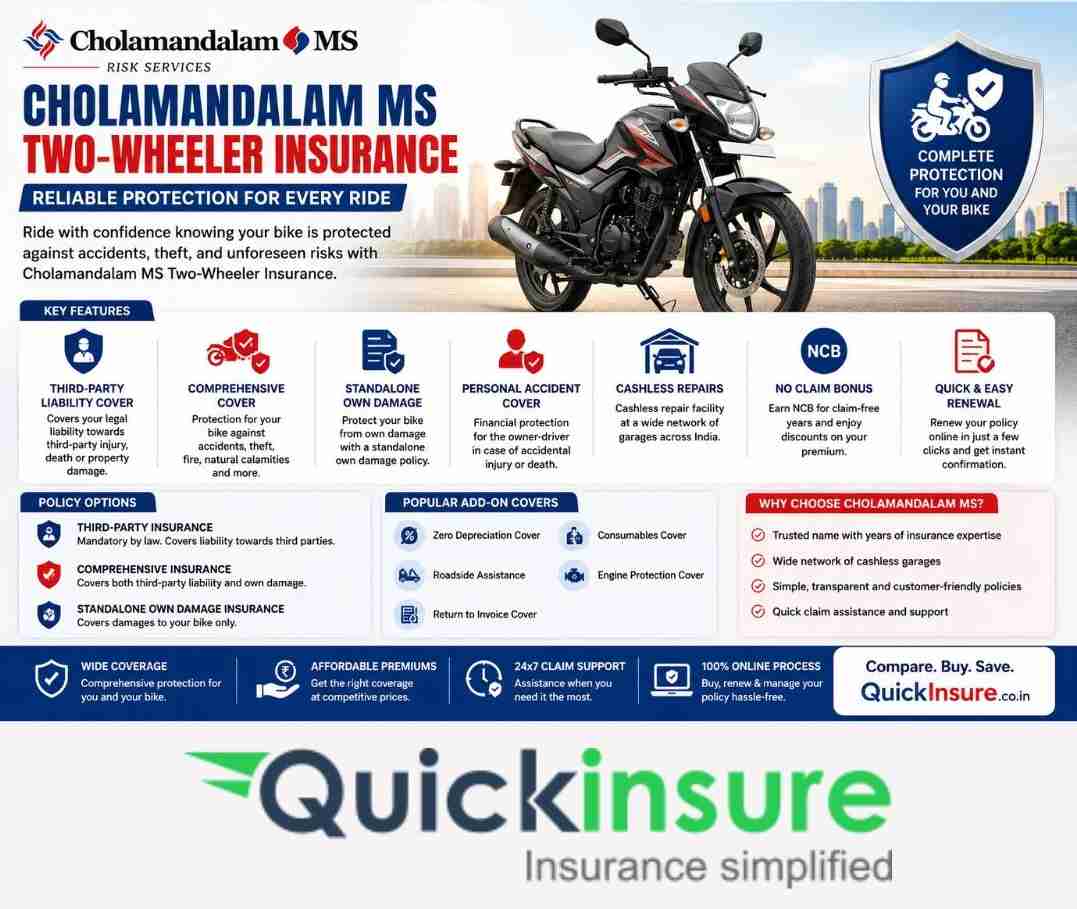
Cholamandalam MS Two-Wheeler Insurance is designed to provide financial protection against damages to your bike or scooter caused by accidents, theft, fire, natural calamities, and man-made disasters. It offers three major policy options: Third-Party Insurance, Comprehensive Insurance, and Standalone Own Damage Insurance, allowing riders to choose coverage based on their needs and budget.
Key Features of Cholamandalam MS Two-Wheeler Insurance
The policy comes with several customer-friendly features, including:
Third-party liability coverage
Comprehensive own damage protection
Standalone Own Damage policy option
Personal Accident Cover for the owner-driver
Cashless repairs at network garages
No Claim Bonus (NC
Long-term insurance options
Quick claim assistance and online policy renewal
These features help provide complete financial protection and peace of mind while riding.
Coverage Offered Under Cholamandalam MS Two-Wheeler Insurance
Third-Party Liability Cover
This policy covers legal liabilities arising from injury, death, or property damage caused to a third party by your insured bike. It is mandatory under the Motor Vehicles Act.
Comprehensive Insurance
A comprehensive policy covers both third-party liabilities and damages to your own bike caused by accidents, theft, fire, floods, earthquakes, storms, riots, and other unforeseen events.
Standalone Own Damage Cover
If you already have a valid third-party insurance policy, you can purchase a Standalone Own Damage policy to protect your bike against accidental damage, theft, and natural calamities.
Popular Add-On Covers
You can enhance your policy with optional add-ons such as:
Zero Depreciation Cover
Roadside Assistance
Return to Invoice Cover
Consumables Cover
Engine Protection Cover
These add-ons provide broader protection and help reduce out-of-pocket expenses during claims.
Benefits of Cholamandalam MS Two-Wheeler Insurance
Some of the key benefits include:
Financial protection against accidental damages
Coverage against theft and natural disasters
Cashless claim facility at network garages
No Claim Bonus for claim-free years
Quick online purchase and renewal
Flexible coverage with useful add-ons
Efficient claim settlement support
These benefits make the policy suitable for both daily commuters and occasional riders.
General Exclusions
The policy generally does not cover:
Normal wear and tear
Mechanical or electrical breakdown
Consequential losses
Riding under the influence of alcohol or drugs
Driving without a valid driving licence
Damages arising from racing or illegal activities
Always read the policy wording carefully to understand the complete list of exclusions before purchasing.
Why Choose QuickInsure?
QuickInsure makes buying and renewing Cholamandalam MS Two-Wheeler Insurance simple and convenient. Compare plans from leading insurers, customize your policy with suitable add-ons, receive instant policy issuance, and enjoy dedicated customer support throughout your insurance journey. With transparent pricing and an easy online process, QuickInsure helps you find the right bike insurance plan in just a few clicks.
Conclusion
Cholamandalam MS Two-Wheeler Insurance provides dependable protection against accidents, theft, natural calamities, and third-party liabilities. With comprehensive coverage options, valuable add-ons, cashless claim facilities, and an easy online buying experience, it is an excellent choice for protecting your bike. Compare policies on QuickInsure, choose the coverage that best suits your needs, and ride with confidence knowing you're financially protected.