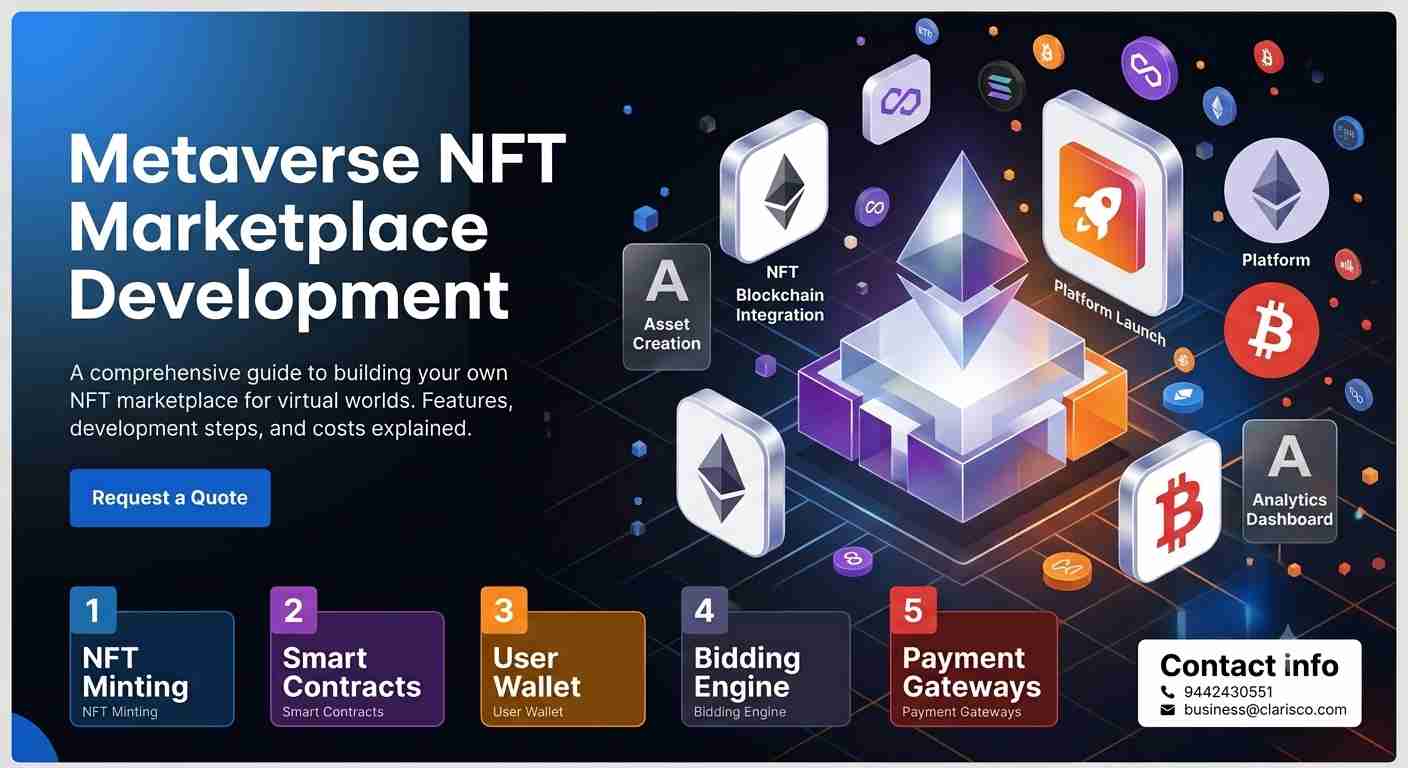



Metaverse NFT Marketplace: A Complete Guide to Building a Virtual NFT Trading Platform
The combination of blockchain, NFTs, and immersive virtual environments is creating new opportunities for businesses in the digital economy. A Metaverse NFT Marketplace brings these technologies together by providing a digital environment where users can create, showcase, buy, sell, trade, and own NFT-based assets.
From virtual land and avatars to digital collectibles and other virtual assets, NFTs can represent ownership of digital items inside metaverse ecosystems. This makes the NFT marketplace an important component of many metaverse-based business models.
For entrepreneurs and businesses planning to enter this space, Metaverse NFT Marketplace Development requires careful planning across blockchain infrastructure, smart contracts, marketplace functionality, database architecture, frontend and backend development, testing, and deployment.
What Is a Metaverse NFT Marketplace?
A Metaverse NFT Marketplace is a blockchain-powered marketplace designed to support the creation and trading of NFTs within a virtual environment.
Users can connect their digital wallets, create or upload eligible digital assets, mint them as NFTs, assign prices, and list them for sale or auction. Buyers can explore available assets and purchase them using supported digital currencies. Once a transaction is completed, ownership of the NFT can be transferred through blockchain-based mechanisms.
The Clarisco page describes a workflow where users connect their wallets, create and upload assets as NFTs, specify prices or auctions, and allow buyers to purchase the assets before ownership is transferred between wallets.
This combination of virtual environments and blockchain-based ownership makes a metaverse marketplace different from a conventional online marketplace.
Why Is a Metaverse NFT Marketplace Important?
The growth of digital ownership has created demand for platforms where users can trade unique blockchain-based assets.
A conventional digital item can often be copied easily. NFTs introduce blockchain-based records that can be used to represent ownership and transaction history for a particular digital asset.
Within a metaverse ecosystem, NFTs can represent different types of virtual assets. Depending on the platform's business model, these can include virtual land, avatars, digital collectibles, gaming-related assets, virtual accessories, artwork, and other digital items.
A well-planned Metaverse NFT Marketplace Development project can therefore provide a dedicated environment for creators, collectors, traders, and businesses to interact with these assets.