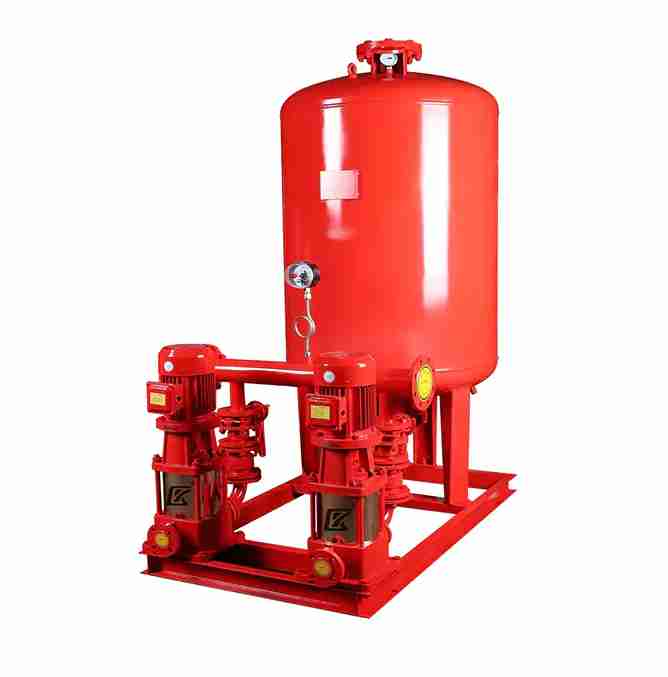


Steady Flow with Energy-saving Constant Pressure Water Supply System
An Energy-saving Constant Pressure Water Supply System delivers water at a steady pressure while adjusting pump activity according to actual demand. The arrangement typically combines variable frequency drives, pressure sensors, and a set of pumps that respond in real time. When water use rises, the system increases pump speed or brings additional units online. When demand falls, it slows the motors or reduces the number of active pumps. This matching of output to need avoids the continuous full-speed operation common in older fixed-speed setups.
Pressure sensors placed at key points in the pipeline feed data to a control unit. The unit compares the measured pressure against a set target and issues commands to the drives. Variable frequency technology allows the motors to run at intermediate speeds rather than switching only between off and full power. The result is smoother pressure delivery and lower electricity use during periods of partial demand.
In residential buildings the Energy-saving Constant Pressure Water Supply System keeps taps, showers, and appliances supplied without noticeable fluctuation. Residents experience consistent flow even when several units draw water at the same time. In commercial properties such as office towers or hotels the same principle supports simultaneous use across multiple floors.
The pumps themselves are selected for their ability to operate efficiently across a range of speeds. Impellers and motors designed for variable operation maintain reasonable efficiency at partial loads. A small pressure tank or buffer vessel often forms part of the circuit, absorbing minor fluctuations and reducing the frequency of pump starts.
Control logic can include soft-start functions that limit current spikes when motors accelerate. This protects both the electrical supply and the mechanical components. Scheduling features allow the system to anticipate known patterns of use, such as morning peaks in residential blocks, and prepare capacity in advance.
Installation usually occurs in a plant room or basement where the main incoming water line enters the building. From there the treated or boosted water travels through the distribution network. Isolation valves and check valves protect individual branches and prevent reverse flow.
The Energy-saving Constant Pressure Water Supply System also supports secondary uses such as irrigation or process water in mixed-use developments. Separate pressure zones can be created so that upper floors receive adequate force while lower levels avoid excess pressure that could stress fixtures.
Monitoring interfaces display current pressure, pump status, and energy consumption figures. Operators can review trends and adjust set points if building occupancy patterns change. Remote access options exist in many configurations, allowing checks without physical presence at the plant.
Because the system modulates power according to real demand, electricity consumption remains proportional to the volume of water delivered. Periods of low use translate directly into reduced motor activity. This relationship forms the core of the energy-saving aspect.
Overall the Energy-saving Constant Pressure Water Supply System provides stable water delivery through responsive control rather than continuous high-speed pumping. The combination of sensors, variable drives, and intelligent sequencing produces a practical solution for structures of varying size and occupancy.
https://www.china-chuangken.co....m/product/water-supp