Diễn đàn
How Is AI in Data Analytics Transforming Business Decision-Making In 2026?

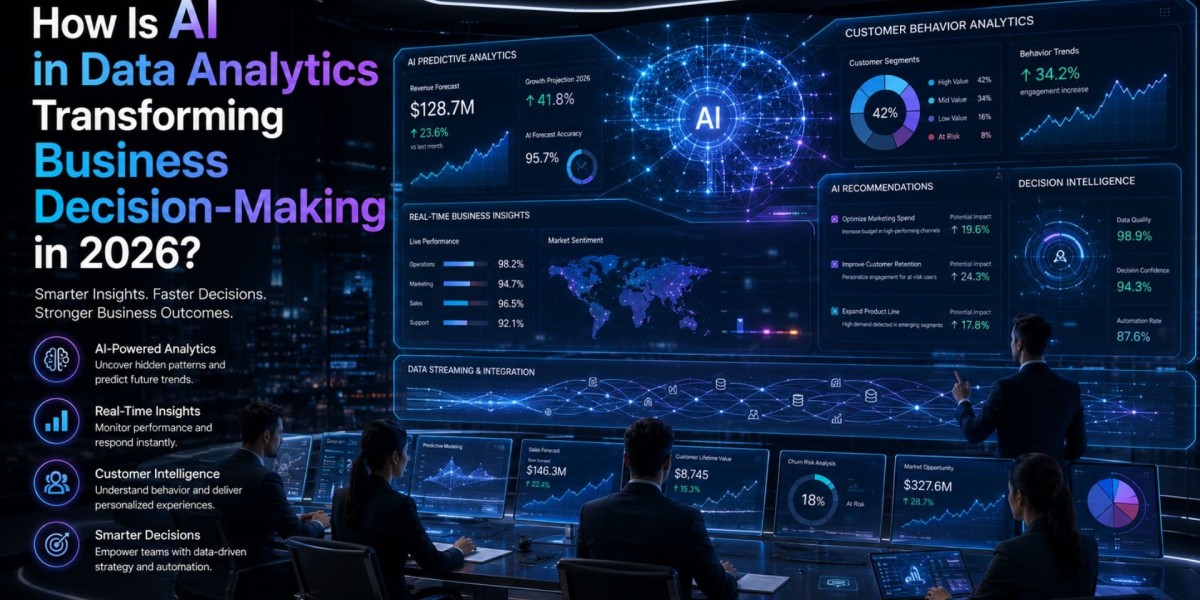
Modern businesses operate in highly competitive environments where fast and accurate decision-making has become essential for long-term success. Organizations now collect massive amounts of customer information, operational metrics, and market data every day through digital platforms and connected systems. Analyzing this information manually is no longer practical for companies that need rapid insights and strategic adaptability. This is one reason why AI in data analytics has become increasingly important for businesses seeking smarter and more efficient decision-making processes. Artificial intelligence systems can process large datasets quickly, identify hidden trends, and generate predictive insights that support business growth and operational efficiency. Companies across industries are now using intelligent analytics tools to improve planning, understand customer behavior, and respond more effectively to changing market conditions. As technology continues evolving, AI-powered analytics is becoming a major driver of innovation and strategic business transformation.
The Growing Importance of Intelligent Data Analysis
Businesses today rely heavily on data to understand customer behavior, monitor performance, and identify future opportunities. Traditional analytics methods often require significant manual effort and may struggle to process large or complex datasets efficiently. Artificial intelligence improves this process by automating analysis and identifying patterns much faster than conventional systems. AI-powered analytics tools can organize information, detect anomalies, and generate real-time insights that support faster business decisions. Organizations using intelligent analytics systems often improve operational efficiency because they can respond to market changes more quickly. These technologies also reduce human error by processing information more consistently and accurately across multiple business functions.
How AI Supports Marketing and Customer Insights
Marketing teams increasingly depend on data-driven insights to create more effective campaigns and improve audience engagement. Businesses now use advanced systems connected to Ai driven marketing strategies to analyze customer behavior, predict purchasing trends, and optimize digital communication efforts. Artificial intelligence can evaluate customer interactions across websites, applications, and social media platforms to identify patterns that support stronger targeting and personalization. 
These insights help businesses create campaigns that feel more relevant to specific audience groups. AI-powered analytics also improve campaign performance monitoring by providing real-time feedback and predictive recommendations. As digital competition continues growing, businesses increasingly rely on intelligent marketing analytics to strengthen customer relationships and improve communication effectiveness.
Predictive Analytics and Smarter Business Strategies
Predictive analytics is becoming one of the most valuable applications of artificial intelligence in modern business operations. This is one reason why AI in data analytics continues gaining attention among organizations seeking better forecasting and strategic planning capabilities. AI systems can analyze historical information and current market conditions to predict customer behavior, identify potential risks, and estimate future trends. Businesses use these predictive insights to improve inventory management, financial planning, operational efficiency, and customer engagement strategies. Predictive analytics also allows organizations to respond proactively rather than reactively when market conditions change. Companies that use intelligent forecasting systems often gain competitive advantages because they make decisions based on deeper analytical understanding and more accurate future projections.
The Future of Personalized Business Intelligence
Artificial intelligence is rapidly transforming how businesses deliver personalized experiences and operational insights. Companies are increasingly adopting technologies connected to AI for personalized strategies to improve customer interactions and provide more relevant services across digital platforms. 
Intelligent analytics systems can study customer preferences, engagement patterns, and purchasing behavior in real time to support more customized business experiences. Personalized business intelligence also helps organizations adapt communication strategies based on audience behavior and market trends. As AI technologies continue advancing, businesses may rely even more heavily on adaptive analytics systems that provide faster insights, automated recommendations, and more personalized operational decision-making capabilities.
Conclusion
Artificial intelligence is reshaping how businesses analyze information, forecast trends, and make strategic decisions in competitive digital environments. Organizations now use advanced analytics systems to process complex datasets more efficiently and generate insights that support smarter planning and customer engagement strategies. As data volumes continue growing across industries, businesses that adopt intelligent analytics technologies may improve operational performance, strengthen market adaptability, and gain long-term competitive advantages through faster and more informed decision-making.
FAQs
Why is AI in data analytics becoming important for businesses in 2026?
AI in data analytics helps businesses process large amounts of information quickly, identify trends, and make faster strategic decisions. Companies increasingly rely on AI because markets are becoming more competitive and data-driven.
Can AI analytics improve customer engagement strategies?
Yes. AI analytics can study customer behavior, purchasing patterns, and engagement trends to help businesses create more targeted marketing campaigns and personalized communication experiences.
How does predictive analytics help business decision-making?
Predictive analytics helps businesses forecast future trends, identify potential risks, and improve planning strategies using historical data and real-time insights generated by artificial intelligence systems.


