


Stop Chasing Hours, Start Capturing Value with Legal Billing Software
For decades, billable hours have been the backbone of law firm revenue. But today’s clients want more transparency, predictability, and value—and law firms want healthier margins without burning out their teams. If you’re still chasing hours at the end of every month, it may be time to rethink not just how you bill, but what you’re really billing for.
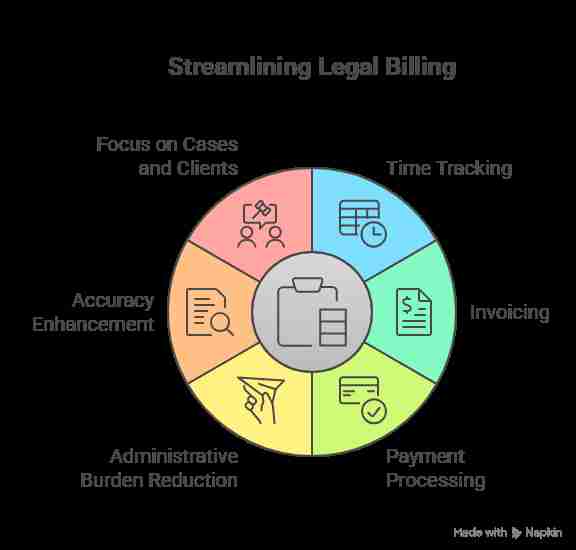
Modern #legal #billing #software helps firms shift from time-consuming, reactive billing to proactive value capture—without sacrificing accuracy or compliance.
The Hidden Cost of Chasing Hours
Manually tracking time is inefficient and risky. Attorneys forget to log work, reconstruct time from memory, or write off hours to avoid client pushback. Over time, this leads to:
Revenue leakage from unbilled or underbilled work
Frustrated attorneys spending nights on timesheets
Delayed invoices and slower cash flow
Client disputes over vague or inconsistent bills
According to industry studies, law firms lose a meaningful percentage of billable time simply because it’s never recorded. That’s not a productivity problem—it’s a systems problem.
What “Capturing Value” Really Means
Capturing value isn’t about billing more hours. It’s about ensuring that all meaningful work is tracked, priced appropriately, and clearly communicated to clients.
With the right legal billing and time tracking software, firms can align billing with outcomes, expertise, and effort—whether they use hourly, flat fee, or hybrid billing models.
Example: From Missed Time to Measurable Revenue
Consider a mid-sized litigation firm that relied on manual time entry. Attorneys often delayed logging time until the end of the week, leading to missed emails, quick client calls, and internal strategy discussions.
After implementing legal billing software with passive time tracking, the firm captured small but critical tasks automatically. The result?
Higher realization rates
Fewer write-offs
More detailed, defensible invoices
No one worked longer hours—they simply captured the value they were already delivering.
How Legal Billing Software Transforms the Billing Process
1. Automated and Accurate Time Tracking
Modern legal billing software tracks time in real time—across emails, documents, calls, and case work—reducing reliance on memory. This ensures billable activities are captured as they happen, not reconstructed days later.
Actionable tip: Encourage attorneys to use timers or passive tracking tools to log work contemporaneously. Accuracy improves, and stress drops.
2. Clear, Client-Friendly Invoices
Detailed, standardized invoices build trust. Legal billing platforms organize entries by matter, task, or phase, making it easier for clients to understand what they’re paying for—and why.
Real-world impact: Firms using structured billing formats report fewer invoice disputes and faster payment cycles.
3. Support for Alternative Fee Arrangements (AFAs)
Clients increasingly prefer flat fees, capped fees, or blended rates. Legal billing software provides the data firms need to price these arrangements profitably by analyzing historical time, costs, and outcomes.
Instead of guessing, firms can confidently offer value-based pricing backed by real metrics.
4. Real-Time Visibility into Firm Performance
With built-in dashboards and reports, partners can see realization rates, work-in-progress, and billing trends at a glance. This allows firms to course-correct early—before revenue slips through the cracks.
Building Trust Through Transparency and Technology
From an EEAT perspective, trust matters. Clients want to know their firm bills fairly and accurately. Regulators and auditors expect compliance with billing standards. Attorneys want systems that support—not hinder—their work.
Well-designed legal billing software strengthens trust by:
Creating consistent billing practices
Maintaining detailed audit trails
Reducing human error and bias
Technology doesn’t replace professional judgment—it supports it.
Making the Shift: Start Small, Think Long-Term
You don’t need to overhaul your entire billing model overnight. Start by improving time capture and invoice clarity. Then use the insights your software provides to explore value-based pricing where it makes sense.
Next steps to consider:
Audit where billable time is currently lost
Identify matters suitable for alternative fees
Use billing data to refine pricing and staffing decisions
Final Thoughts
Chasing hours is exhausting—and unnecessary. With modern legal billing software, firms can focus less on tracking time and more on delivering results. By capturing value accurately, transparently, and consistently, law firms improve profitability, client satisfaction, and attorney well-being.
The work is already being done. The right software ensures it’s recognized—and rewarded. https://cyberspace.in/products..../legal-time-billing-