
whoosmind whoosmind
    #seo #socialmedia #seoservice #usaaccounts #on_page_seo
    חיפוש מתקדם
  • התחברות
  • הירשם

  • מצב לילה
  • © 2026 whoosmind
    על אודות • מַדרִיך • צור קשר • מפתחים • מדיניות פרטיות • תנאי שימוש • הֶחזֵר

    בחר שפה

  • Arabic
  • Bengali
  • Chinese
  • Croatian
  • Danish
  • Dutch
  • English
  • Filipino
  • French
  • German
  • Hebrew
  • Hindi
  • Indonesian
  • Italian
  • Japanese
  • Korean
  • Persian
  • Portuguese
  • Russian
  • Spanish
  • Swedish
  • Turkish
  • Urdu
  • Vietnamese
קהילה
שעון סלילים אירועים בלוג שׁוּק פוֹרוּם המוצרים שלי הדפים שלי
לַחקוֹר
לַחקוֹר פוסטים פופולריים משחקים סרטים מקומות תעסוקה הצעות מימון
© 2026 whoosmind
  • Arabic
  • Bengali
  • Chinese
  • Croatian
  • Danish
  • Dutch
  • English
  • Filipino
  • French
  • German
  • Hebrew
  • Hindi
  • Indonesian
  • Italian
  • Japanese
  • Korean
  • Persian
  • Portuguese
  • Russian
  • Spanish
  • Swedish
  • Turkish
  • Urdu
  • Vietnamese
על אודות • מַדרִיך • צור קשר • מפתחים • מדיניות פרטיות • תנאי שימוש • הֶחזֵר
EnnoWagner
User Image
גרור כדי למקם מחדש את הכריכה
EnnoWagner

EnnoWagner

@EnnoWagner
  • ציר זמן
  • קבוצות
  • אוהב
  • הבא 0
  • עוקבים 0
  • תמונות
  • סרטונים
  • סלילים
  • מוצרים
0 הבא
0 עוקבים
5 פוסטים
זָכָר
image
EnnoWagner
EnnoWagner
1 י

Form Meets Function: Exploring the Role of Contemporary Ceramics in the Green River Project

As we navigate a world increasingly driven by digital and mass-produced aesthetics, a resurgence of hand-made design has emerged to challenge the coldness of modernism. Among the most compelling examples of this shift is the Green River Project, a studio that uses contemporary ceramics to reintroduce warmth, tactility, and narrative into the built environment. Their works are not merely beautiful—they are deeply intentional.

The Craft of Materiality in the Green River Project
What makes the Green River Project stand out is its commitment to materials. Their ceramic work is rooted in experimentation with natural substances—iron-rich clays, mineral glazes, and locally sourced pigments. This authenticity infuses their pieces with a sense of place and purpose.

Whether it’s a tiled stove in a Hudson Valley cabin or a series of ceramic sconces in a Brooklyn brownstone, every creation carries the fingerprint of the artisan. Their understanding of contemporary ceramics goes beyond visual impact—it’s about the emotion that materials evoke.

Collaborating with potters and ceramicists who share their ethos, the studio integrates ceramic design seamlessly with wood, stone, and textile. The result is a dialogue between mediums that reflects the multifaceted nature of modern living.

Ceramics as Architecture: Building with Clay
In the hands of the Green River Project, ceramics aren’t confined to the tabletop. Their installations often involve architectural applications—clay as surface, as structure, as accent. By doing this, they place contemporary ceramics at the heart of environmental storytelling.

For example, their recent “Off Grid” series included handmade tile stoves designed for rural retreats. These stoves didn’t just function as heat sources—they were sculptural centers of domestic life. The use of ceramics here became deeply personal, a bridge between old-world craftsmanship and new-world design.

In doing so, they’ve reimagined what ceramics can be: not fragile accessories, but robust, integral components of the spaces we inhabit.

Conclusion
The Green River Project reinvents tradition with every piece they craft. Their work in contemporary ceramics is not about nostalgia, but about reinvention. By grounding their artistry in the physical and the personal, they offer a compelling model for future makers—a model where every object has a story, every material a memory, and every space a soul.
https://galeriesardine.squarespace.com/sardines

כמו
תגובה
לַחֲלוֹק
EnnoWagner
EnnoWagner
1 י

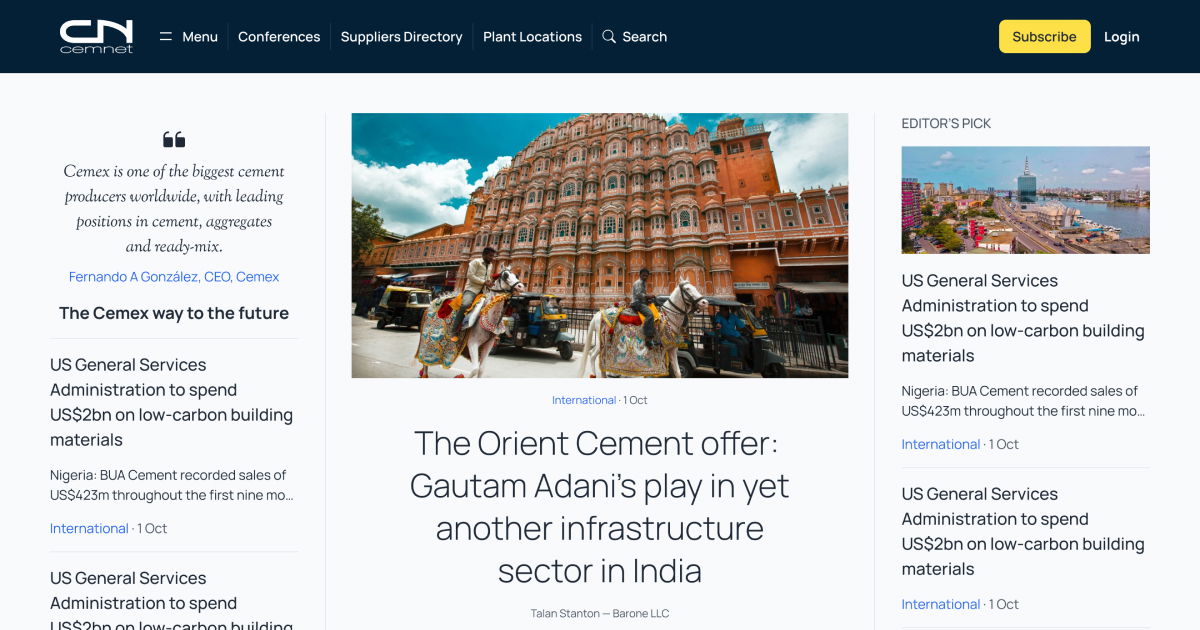
The Evolution of the Cement Industry: Past, Present, and Future

The cement industry plays a pivotal role in the global economy. From building the foundations of modern cities to developing sustainable infrastructure, cement has become indispensable. However, like many other industries, the cement industry has gone through major transformations, adapting to environmental concerns and technological innovations. This article explores the historical development, current status, and future outlook of this essential sector.

The Origins of the Cement Industry
Ancient Beginnings
The use of cement-like materials can be traced back to ancient civilizations. The Egyptians used gypsum mortars in construction, while the Romans developed pozzolanic cement by mixing lime and volcanic ash, giving rise to structures that still stand today.
Industrial Revolution and Modern Cement
The modern cement industry began in the 19th century with the invention of Portland cement by Joseph Aspdin in 1824. This innovation laid the groundwork for large-scale industrial production, transforming construction practices worldwide.

Current Trends in the Cement Industry
Global Market Dynamics
The cement industry today is dominated by a few major players with a global footprint. Countries like China, India, and the United States contribute significantly to global production. Market trends show increasing consolidation, rising demand from developing economies, and fluctuating energy costs.
Environmental Challenges and Sustainability
One of the biggest challenges the cement industry faces is its carbon footprint. Cement production accounts for about 7-8% of global CO2 emissions. To address this, companies are investing in carbon capture technologies, alternative fuels, and more efficient manufacturing processes.

Future of the Cement Industry
Innovations and Green Technologies
Future growth in the cement industry will depend on its ability to innovate. Emerging technologies like green cement, low-clinker alternatives, and AI-powered optimization are set to revolutionize the sector.
Policy and Regulatory Frameworks
Governments around the world are implementing stricter environmental regulations. The cement sector must align with these frameworks to remain competitive. Incentives for green innovation and penalties for high emissions will shape the future landscape.

Conclusion
The cement industry has evolved remarkably from its rudimentary beginnings to a technologically advanced sector. As the world transitions towards sustainability, the cement industry must embrace innovation and environmental stewardship. Its success will be measured not just in production metrics, but also in its contribution to a greener planet.
https://www.cemnet.com/

CemNet Logo
Favicon 
www.cemnet.com

CemNet Logo

CemNet.com is the leading online platform for the global cement industry, offering news, analysis, conferences, training, and expert insights for cement professionals worldwide.
כמו
תגובה
לַחֲלוֹק
EnnoWagner
EnnoWagner
1 י

How to Launch and Thrive in Remote Scribe Jobs: A Step-by-Step Path

For professionals seeking remote work that is structured, stable, and impactful, remote scribe jobs stand out as an accessible gateway. Whether you're interested in healthcare support or remote documentation roles in various industries, this article provides a road‑map—step by step—for launching and thriving in a remote scribing career.

Step 1 — Evaluating Fit for Remote Scribe Jobs
Assess Your Skills and Motivation
Ask yourself: Do you type quickly and accurately? Are you comfortable listening and documenting in real time? Do you thrive in structured, repetitive, and detail‑oriented workflows? Also ensure you can commit to set shifts and maintain concentration over video/audio feeds.

Consider the Work Environment
Your home office should be distraction‑free, with good acoustics, fast internet (preferably wired), backup power options, and a privacy‑compliant workspace to handle sensitive information.

Training and Certification Preparation
Formal and Informal Learning Options
Pursue accredited online programs—many offer modules in medical terminology, transcription protocols, legal jargon, or EMR platforms. Alternatively, free practice resources like sample patient audio, medical glossaries, or document templates help improve competence.

Certification and Resume Building
Certifications such as CMSS or vendor-specific scribe programs bolster your profile. Add real metrics to your resume—typing speed, error rates, sample charts completed, or mock session scores.

Step 2 — Searching and Applying for Remote Scribe Jobs
Where to Find Openings
Scan remote‑friendly job boards like FlexJobs, Indeed, LinkedIn, and specialized medical scribe agencies. Use filters or search strings including remote scribe jobs, “virtual scribe,” or “tele‑scribe” for precision.

Tailoring Your Application
Highlight your typing speed and documentation accuracy. Mention familiarity with EMR or relevant platforms. Describe how you maintain productivity and handle remote workflows—for example, completing 20 documented visits per shift with 99% accuracy.

Preparing for Virtual Interviews
Technical Test Simulations
Be ready for live transcription exercises or timed audio-to‑text tests. Practice with sample medical or business audio files and edit for formatting speed and clarity.

Self‑Presentation and Communication Skills
Even though the work is remote, hiring managers value professionalism: clear articulation, prompt replies, and ability to describe how you adapt to remote supervision or feedback.

Step 3 — Excelling On the Job in Remote Scribe Jobs
Establish Clear Workflow Habits
Set up a consistent routine: check-in procedures, pre‑shift software launch, note‑taking templates, and post‑shift documentation reviews. Use reminders or calendars to stay punctual.

Maintain Accuracy and Consistency
Regularly review your own charts or transcripts. Use built‑in quality control tools and collaborate with reviewers. Track error‑free streaks and ask for constructive feedback to improve further.

Building Trust and Earning Recognition
Demonstrate Reliability
Show up consistently, meet deadlines, and volunteer for extra shifts or backup coverage when possible. Trust earns you priority scheduling and better assignments.

Expand Your Role
As you gain experience, express interest in specialization—such as orthopedics, pediatrics, legal deposition scribing, or quality‑control leadership. This opens pathways to higher pay or supervisory roles.

Conclusion
From self‑evaluation and training through applying, interviewing, and performing effectively, remote scribe jobs offer a rewarding, remote‑friendly career track. Emphasizing speed, accuracy, and dependable communication helps you stand out. As you build expertise, opportunities expand—from specialized scribing assignments to leadership roles in documentation teams or healthcare administration. With dedication and strategic growth, remote scribe jobs can be the gateway to long‑term professional success in the virtual workplace.

https://myvirtualscribe.us/

Favicon 
myvirtualscribe.us

Reset

Hire a remote medical scribe from My Virtual Scribe and reduce the burden of EHR documentation. Scribes are vetted and trained. Schedule a consultation today.
כמו
תגובה
לַחֲלוֹק
EnnoWagner
EnnoWagner
1 י

Green Radiance: How Plant Based Skincare and Skin Health Supplements Transform Your Glow

In a world flooded with quick-fix beauty remedies, a balanced, nature-inspired regimen—melding plant based skincare and well‑formulated skin health supplements—stands out. Embrace a clean, green strategy for luminous, lasting skin radiance.

Philosophy Behind the Synergy
Botanical Simplicity vs. Synthetic Complexity
Plant based skincare focuses on pure, plant-derived actives like calendula, sea buckthorn, licorice root—non-irritating and eco-conscious. Paired with internal skin health supplements, you reinforce effects from within.
https://glojobeauty.com/pages/the-science

כמו
תגובה
לַחֲלוֹק
EnnoWagner
EnnoWagner
1 י

Digitales Diktieren in der Medizin: So profitieren Ärzte von moderner Dokumentation

Im digitalen Zeitalter wandelt sich die medizinische Dokumentation grundlegend. Die Dokumentation Diktieren Ärzte ermöglicht eine präzise und schnelle Erfassung von Patientendaten, die für die Diagnose und Behandlung unerlässlich sind. Dabei spielt nicht nur die Zeitersparnis eine Rolle, sondern auch die bessere Organisation der Dokumente. Dieser Artikel zeigt Ihnen, wie Sie durch Diktieren Ihre Praxis effizienter gestalten.


Die Herausforderung der Dokumentation im Praxisalltag
Täglich müssen Ärzte zahlreiche Patientendaten erfassen, dokumentieren und aktualisieren. Dies erfordert viel Zeit und Konzentration, die oft zulasten der Patientenversorgung geht. Die manuelle Dokumentation ist zeitaufwendig und anfällig für Fehler.

Wie Diktieren die Dokumentation vereinfacht
Diktiergeräte und Spracherkennungssoftware wandeln gesprochene Worte in Text um – und zwar schnell und zuverlässig. Durch die Dokumentation Diktieren Ärzte wird der gesamte Prozess beschleunigt, was zu mehr Kapazitäten für die eigentliche Patientenbetreuung führt.
https://www.medicusdata.ch/de

image
כמו
תגובה
לַחֲלוֹק
טען עוד פוסטים

לא חבר

האם אתה בטוח שאתה רוצה להתנתק?

תדווח על המשתמש הזה

ערוך הצעה

הוסף נדבך


בחר תמונה
מחק את השכבה שלך
האם אתה בטוח שברצונך למחוק את השכבה הזו?

ביקורות

על מנת למכור את התוכן והפוסטים שלך, התחל ביצירת מספר חבילות. מונטיזציה

שלם באמצעות ארנק

התראת תשלום

אתה עומד לרכוש את הפריטים, האם אתה רוצה להמשיך?

בקש החזר