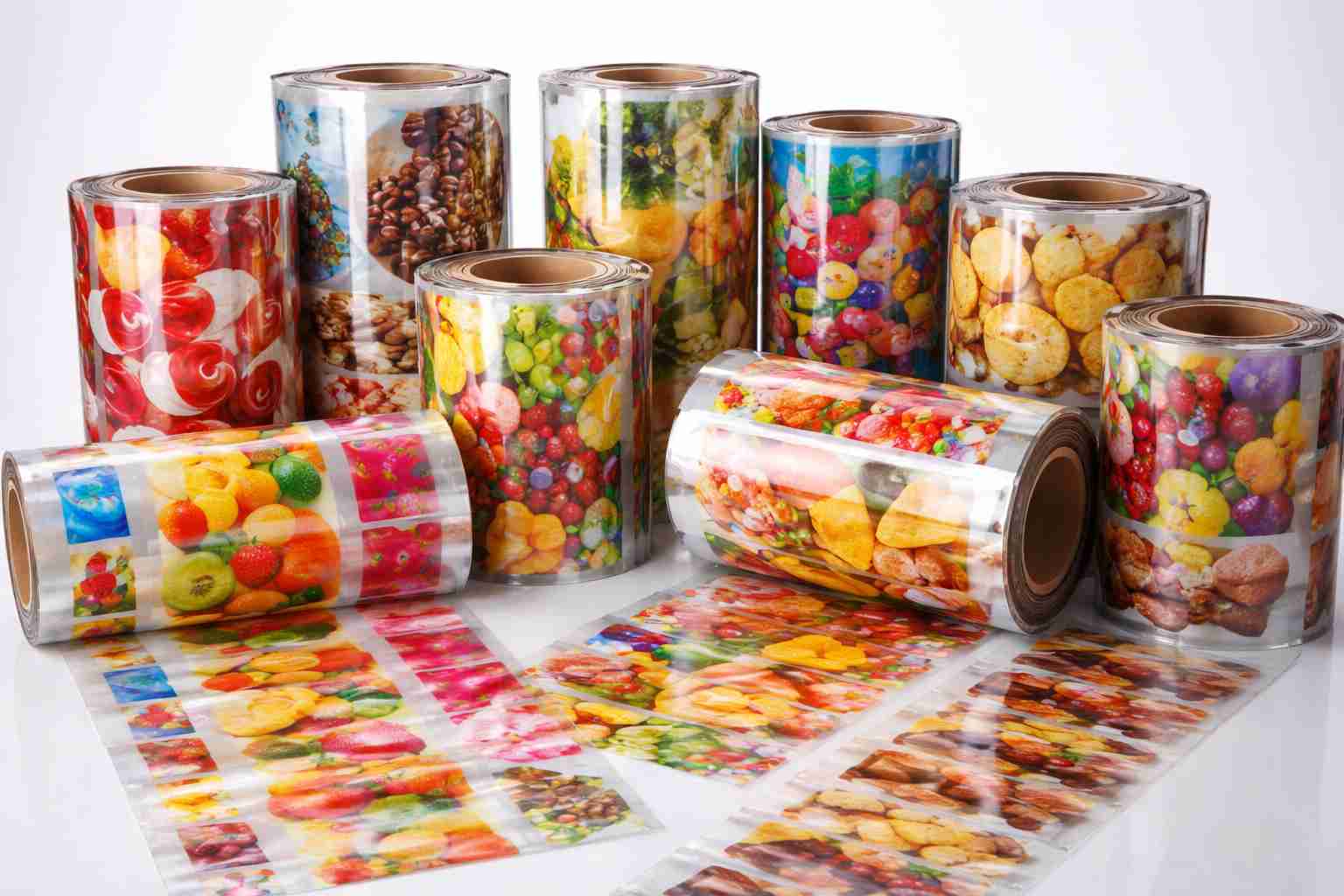
Printed Plastic Films Market is gaining momentum due to rising retail shelf-impact branding needs
Printed Plastic Films Market is gaining momentum due to rising retail shelf-impact branding needs as brands compete intensely for consumer attention in crowded retail spaces. Packaging has become a powerful marketing tool, and advanced printing solutions are enabling stronger visual communication. More insights can be explored through the printed plastic films market
, highlighting evolving branding and packaging trends.
Learn More:https://www.pristinemarketinsi....ghts.com/printed-pla
Market Overview
The packaging industry is increasingly driven by visual branding strategies where product packaging plays a key role in influencing buying decisions. Printed plastic films are widely used across FMCG, personal care, food, and pharmaceutical sectors due to their flexibility and high-quality print compatibility.
Retail shelf competition has intensified, making packaging design a critical factor in product success and brand recognition.
Key Market Drivers
Rising Shelf-Impact Branding Needs
Brands are focusing heavily on shelf-impact packaging to differentiate products in highly competitive retail environments. Eye-catching graphics, bold colors, and premium finishes are becoming essential to attract consumers within seconds.
Expansion of Organized Retail
The growth of supermarkets, hypermarkets, and convenience stores is increasing demand for standardized and visually appealing packaging that improves product visibility on shelves.
Increasing Consumer Visual Sensitivity
Modern consumers often associate packaging design with product quality. This behavior is pushing companies to invest in advanced printed plastic films for stronger brand positioning.
Role of Printing Technology in Branding
High-Resolution Printing Capabilities
Advanced printing technologies enable sharp images, vibrant colors, and detailed graphics that significantly improve shelf appeal.
Premium Packaging Finishes
Matte, gloss, metallic, and textured finishes are widely used to enhance packaging aesthetics and create a premium product perception.
Flexible Customization Options
Digital printing allows brands to quickly modify packaging designs for seasonal promotions, campaigns, and limited editions.
Market Trends
Shift Toward Digital Printing
Digital printing is gaining traction due to its flexibility, cost efficiency for short runs, and faster production cycles.
Rise of Sustainable Branding
Brands are integrating eco-friendly messaging into packaging using recyclable printed plastic films.
Packaging as a Marketing Tool
Packaging is increasingly being used as a storytelling platform to communicate brand identity and values.
Market Challenges
High Competition in Retail Markets
Intense competition forces continuous packaging innovation, increasing production pressure on manufacturers.
Cost Pressure from Premium Designs
High-quality printing and finishing techniques increase production costs.
Sustainability Expectations
Consumers and regulators demand eco-friendly packaging without compromising visual appeal.
Opportunities in the Market
Growth of E-commerce Packaging
Online retail expansion is increasing demand for attractive packaging that enhances unboxing experiences.
Expansion in Emerging Economies
Rising disposable incomes and urbanization are boosting demand for branded consumer goods.
Smart Packaging Integration
QR codes and interactive packaging features are opening new branding opportunities.
Regional Insights
North America and Europe lead in premium packaging adoption due to strong retail infrastructure and branding focus.
Asia-Pacific is the fastest-growing region due to expanding FMCG industries and urban consumer growth.
Latin America and the Middle East are showing steady growth with increasing retail modernization.
Future Outlook
The Printed Plastic Films Market is expected to grow further as retail shelf-impact branding becomes a key competitive strategy. Continuous innovation in printing technologies and sustainable packaging solutions will drive long-term market expansion.